While Obama weighs a military strike to punish Syria for using chemical weapons, Syria's President Assad vows he will retaliate by attacking Tel Aviv. He will have the backing of his political allies, Russia and Iran.
The recent run on the market for gas masks in Israel proves how
seriously Jewish citizens are taking this.
An ancient 'un-fulfilled' prophecy that intrigues biblical scholars is that some day Damascus will be completely annihilated (Is. 17:1). With rising tension all over the
Middle East, and now escalating war in Syria's capital, might we soon be witnesses to the fulfillment of this prophecy?
Don't be surprised. With 100,000 citizens killed, and a
million now refugee’d in surrounding nations, the Syrian war has become one of the worst in modern Middle Eastern history. The Bible says when we see these prophetic signs, we should lift up our heads. The Israelis are covering theirs with gas masks.
Thursday, August 29, 2013
Wednesday, August 28, 2013
Do You Complain about your Work Out?
Each day when I check in at 24-hour Fitness, the staff will say “Enjoy
your workout!” And I laugh to myself because if I thought of it as work, I wouldn't enjoy it; and I'm sure you would hear me complaining about having to go to the gym!
Complaining about one's ‘work’ is universal: 70% of Americans say they feel so unfulfilled, they hate their jobs. Solomon said, “I hated [my work] because everything done here under the sun is meaningless—like chasing the wind” (Eccl. 2:17). But then added, “There is nothing better for people than to be happy in their work; it is the gift of God” (Eccl. 3:13, 12, 22). If we could see our work as divinely purposed, I'm sure it would cut down on the complaining!
Solomon also said, “Without a vision, people perish,” roughly translated, “when we can’t see with God’s eyes, we fall apart.” Jesus saw His work through God’s eyes: “I brought glory to you here on earth by completing the work you gave me to do” (John 17:4). Paul completed his work with the same satisfaction: “I have fought the good fight, finished the race, and kept the faith” (2 Tim. 4:7-8). And wouldn't we all like to say we finished our “workout” (Phil 2:12)—without complaining (Phil 2:14)!
Complaining about one's ‘work’ is universal: 70% of Americans say they feel so unfulfilled, they hate their jobs. Solomon said, “I hated [my work] because everything done here under the sun is meaningless—like chasing the wind” (Eccl. 2:17). But then added, “There is nothing better for people than to be happy in their work; it is the gift of God” (Eccl. 3:13, 12, 22). If we could see our work as divinely purposed, I'm sure it would cut down on the complaining!
Solomon also said, “Without a vision, people perish,” roughly translated, “when we can’t see with God’s eyes, we fall apart.” Jesus saw His work through God’s eyes: “I brought glory to you here on earth by completing the work you gave me to do” (John 17:4). Paul completed his work with the same satisfaction: “I have fought the good fight, finished the race, and kept the faith” (2 Tim. 4:7-8). And wouldn't we all like to say we finished our “workout” (Phil 2:12)—without complaining (Phil 2:14)!
Labels:
complaining,
dead works,
fight,
finish well,
gift,
good works,
grumbling,
race,
working,
workmanship
Tuesday, August 27, 2013
"Preachers of L.A." Reality Show: Are they Real?
Coming to Oxygen Network this Fall is a reality show, Preachers of L.A., about 6 flamboyant prosperity preachers, known for fiery sermons and large living. Preachers of L.A. will explore the human side of their wealth-and-fame lifestyles both inside and outside the church.
The prosperity interpretation of their gospel is articulated by reality cast member Bishop Gibson, a former gang member now ministering to 4,500 parishioners: “P. Diddy and Jay-Z are not the only ones who should be driving Ferraris and living in large houses.” Unfortunately, this is not new. 50 years ago, DeVern Fromke wrote, “The great fallacy of our day is that we seek God for ‘what He can do for me’ rather than to know Him for Who He is.”
How will the Preachers of L.A. reality show affect the spiritual growth of TV viewers when their reality doesn't match that of these alleged men of faith? How many may leave the church discouraged, possibly embittered, probably poorer, and, undoubtedly confused about what is real?
The prosperity interpretation of their gospel is articulated by reality cast member Bishop Gibson, a former gang member now ministering to 4,500 parishioners: “P. Diddy and Jay-Z are not the only ones who should be driving Ferraris and living in large houses.” Unfortunately, this is not new. 50 years ago, DeVern Fromke wrote, “The great fallacy of our day is that we seek God for ‘what He can do for me’ rather than to know Him for Who He is.”
How will the Preachers of L.A. reality show affect the spiritual growth of TV viewers when their reality doesn't match that of these alleged men of faith? How many may leave the church discouraged, possibly embittered, probably poorer, and, undoubtedly confused about what is real?
Labels:
false shepherd,
false teachers,
prosperity,
reality shows,
wealthy
Monday, August 26, 2013
“Thy will be done”: Hardest Prayer you will ever Pray
“Thy will be done” is not inert acquiescence. It is not futile or fatalistic. It is a prayer of dynamic
faith. It may be the hardest prayer you will ever pray. “Thy will be
done” means you are willing for God’s will to prevail over yours. It means giving up control, surrendering rights, and accepting divine discipline.
Praying “Thy will be done” requires both child-like trust and seasoned belief in God's Goodness (Ps. 86:5; Ro. 8:28). It is Job's “though He slay me, yet will I trust in Him” (Job 3:15). It is the unshakable “even if He does not [rescue us]” confidence of the three thrown into the fiery furnace (Dan. 3:18).
In Practicing the Presence of God, Brother Lawrence explains, “We ought to give ourselves up to God, to things temporal and spiritual, and seek our satisfaction only in the fulfilling of His will, whether by suffering or consolation, each being equal to a soul truly resigned.” During these increasingly uncertain times, knowing that God's Will will be done is a comfort and strength. But that doesn't mean it won't be the hardest prayer you will ever pray.
Praying “Thy will be done” requires both child-like trust and seasoned belief in God's Goodness (Ps. 86:5; Ro. 8:28). It is Job's “though He slay me, yet will I trust in Him” (Job 3:15). It is the unshakable “even if He does not [rescue us]” confidence of the three thrown into the fiery furnace (Dan. 3:18).
In Practicing the Presence of God, Brother Lawrence explains, “We ought to give ourselves up to God, to things temporal and spiritual, and seek our satisfaction only in the fulfilling of His will, whether by suffering or consolation, each being equal to a soul truly resigned.” During these increasingly uncertain times, knowing that God's Will will be done is a comfort and strength. But that doesn't mean it won't be the hardest prayer you will ever pray.
Friday, August 23, 2013
Does Anyone Believe in the Bible Anymore?
As a 5-year old Sunday Schooler, I sang “The B-I-B-L-E, yes that's the book for me; I stand alone on the word of God, the B-I-B-L-E.” That was 60 years ago.
Today, disbelief that the Bible is the inerrant WORD of God is on the rise among evangelicals. A George Barna Research study, exploring the religious beliefs of adults in the 12 largest denominations, revealed that only 41% believe in the total accuracy of the Bible. And more alarming, 85% of students at America's largest evangelical seminaries do not believe in Scripture's inerrancy. In the 18th century, Voltaire declared, “If we would destroy the Christian religion, we must first of all destroy man’s belief in the Bible.”
Disregard for doctrinal soundness is prophesied for end times. Preaching contemporary ‘how-to-be-better’ messages, born out of the 1960’s “felt needs” and “seeker sensitive” movements, has become common fodder in most pulpits. As one pastor said, “you have to scratch people where they itch.” Perhaps he hadn’t read Paul’s warning against preaching to “itching ears” (1 Tim 4:4).
Today, disbelief that the Bible is the inerrant WORD of God is on the rise among evangelicals. A George Barna Research study, exploring the religious beliefs of adults in the 12 largest denominations, revealed that only 41% believe in the total accuracy of the Bible. And more alarming, 85% of students at America's largest evangelical seminaries do not believe in Scripture's inerrancy. In the 18th century, Voltaire declared, “If we would destroy the Christian religion, we must first of all destroy man’s belief in the Bible.”
Disregard for doctrinal soundness is prophesied for end times. Preaching contemporary ‘how-to-be-better’ messages, born out of the 1960’s “felt needs” and “seeker sensitive” movements, has become common fodder in most pulpits. As one pastor said, “you have to scratch people where they itch.” Perhaps he hadn’t read Paul’s warning against preaching to “itching ears” (1 Tim 4:4).
Labels:
beliefs,
bible,
end times,
felt need,
itching ears,
seeker sensitive,
unbelief,
Word of God,
word of truth
Thursday, August 22, 2013
Messianic Judaism: Living in the Shadows
A friend wrote me recently about a surge in Messianic Judaism in his
country; it is a blend of evangelical Christian theology with Jewish traditions, like observing the Sabbath and Jewish
holidays. I told him this movement is nothing new.
Paul warned Peter against those who were compelling Gentiles to live like Jews, denying them their freedom in Christ, and putting them under a yoke of slavery for not celebrating holy days or new moon ceremonies or Sabbaths, things that were only shadows of the reality yet to come, Christ himself (Gal. 2:14, 5:1; Col 2:16-17).
It is easy to see these practices as shadows. But to some degree, and in our own ways, do we not find ourselves still living in the shadows rather than the full light of our freedom in Christ? “Satan, the god of this age, has blinded the minds of unbelievers [and ‘unbelieving’ believers] so that they cannot see the light of the gospel that displays the glory [the reality] of Christ” (2 Cor. 4:4).
Paul warned Peter against those who were compelling Gentiles to live like Jews, denying them their freedom in Christ, and putting them under a yoke of slavery for not celebrating holy days or new moon ceremonies or Sabbaths, things that were only shadows of the reality yet to come, Christ himself (Gal. 2:14, 5:1; Col 2:16-17).
It is easy to see these practices as shadows. But to some degree, and in our own ways, do we not find ourselves still living in the shadows rather than the full light of our freedom in Christ? “Satan, the god of this age, has blinded the minds of unbelievers [and ‘unbelieving’ believers] so that they cannot see the light of the gospel that displays the glory [the reality] of Christ” (2 Cor. 4:4).
Labels:
blind,
blind spot,
darkness,
free,
light,
light of the world,
reality,
reality shows,
Satan,
shadow
Wednesday, August 21, 2013
What will you gain when you lose?
If you've been trying to lose weight, maybe you should eat more cereal. A Kellogg’s commercial
promises you can lose weight eating it. The campaign slogan, “What will
you gain when you lose?,” also implies that cereal lovers will gain self-esteem, self-confidence, and the respect of others: standards of measurement in this world.
Before being killed by Auca Indians, missionary Jim Elliott wrote (rather prophetically), “He is no fool who gives up what he cannot keep to gain what he cannot lose.” A whole generation was inspired by this man who “lost” family, home, and life for Christ.
Even though we too believe our “kingdom is not of this world,” it’s hard not to self-measure by an earthly yardstick. Thus Jesus warns, "Whoever gains his life will lose it, and whoever loses his life for my sake will gain it" (Matt. 10:39). And Paul said, “I count all things loss in view of the surpassing value of knowing Christ … For me to live is Christ, and to die is gain” (Phil. 3:8; 1:21). For us, the answer to Kellogg's question is Christ. But a more relevant question for us is, What are we willing to lose to gain Him?
Before being killed by Auca Indians, missionary Jim Elliott wrote (rather prophetically), “He is no fool who gives up what he cannot keep to gain what he cannot lose.” A whole generation was inspired by this man who “lost” family, home, and life for Christ.
Even though we too believe our “kingdom is not of this world,” it’s hard not to self-measure by an earthly yardstick. Thus Jesus warns, "Whoever gains his life will lose it, and whoever loses his life for my sake will gain it" (Matt. 10:39). And Paul said, “I count all things loss in view of the surpassing value of knowing Christ … For me to live is Christ, and to die is gain” (Phil. 3:8; 1:21). For us, the answer to Kellogg's question is Christ. But a more relevant question for us is, What are we willing to lose to gain Him?
Labels:
dying for Christ,
dying to live,
dying to self,
gain,
kingdom of God,
lose,
loser,
lost,
self-control
Monday, August 19, 2013
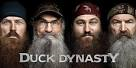
Angela Jolie probably doesn’t watch Duck Dynasty
In the front section of USA Today on Friday was a feature article,
“Letting teenagers have their romantic sleepovers,” the point being it is better for parent/child relationships to let kids ‘do it’ at home. Angela
Jolie is cited as one whose mother allowed her to have her boyfriend sleep over
when she was only 14—and who plans to be just as liberal with her children (more fodder for TV
programs like “Modern American Family”).
This is why I rejoiced to see the Robertson family making the rounds on TV last week, promoting their show "Duck Dynasty" (averaged 8.4 million viewers), along with their Christian values. In an interview, one of the Robertson brothers, Jase, and his wife Missy, said their faith and family values were the reason they chose to remain abstinent until marriage, and now see the same commitment in their children.
I can’t guarantee that you will like watching “Duck Dynasty” but we can all thank God that in a time when shows about selfish housewives are peaking, American viewers have fallen in love with a godly family who closes every episode at the dinner table giving thanks and honor to Jesus Christ. Angela Jolie and her children probably won't be watching.
This is why I rejoiced to see the Robertson family making the rounds on TV last week, promoting their show "Duck Dynasty" (averaged 8.4 million viewers), along with their Christian values. In an interview, one of the Robertson brothers, Jase, and his wife Missy, said their faith and family values were the reason they chose to remain abstinent until marriage, and now see the same commitment in their children.
I can’t guarantee that you will like watching “Duck Dynasty” but we can all thank God that in a time when shows about selfish housewives are peaking, American viewers have fallen in love with a godly family who closes every episode at the dinner table giving thanks and honor to Jesus Christ. Angela Jolie and her children probably won't be watching.
Friday, August 16, 2013
Has Paula Deen Cooked her Goose?
By now everyone knows that the Food Network has cancelled the
queen-of-fried-foods TV star Paula Deen after she acknowledged using racial
slurs 30 years ago. What I find most
significant about this debacle is what it revealed about the public: they are very
unforgiving. What it reveals about Paula Deen, a self-confessed born-again
Christian, is yet to be seen. Of course the earthlings cannot be expected to forgive—they have no basis for love and grace. But we believers can (and must) forgive because we have been forgiven (Col. 3:13). As a believer, Paula Deen is now in the hard position of forgiving those who have refused to pardon her.
Unforgiveness is Satan’s most effective tool against us. Even as Paula’s fat-drenched foods slowly harden the arteries, so too, unforgiveness is a silent killer, but much faster. And if Paula does not watch her heart, she could turn from the ‘queen of butter’ into the ‘queen of bitter’ overnight.
Labels:
bitterness,
forgiveness,
forgiving yourself,
unforgiveness
Thursday, August 15, 2013
Sitting on God’s Front Porch
In our new neighborhood, we have neighbors who sit on their front
porches all day. From that vantage, they see everything that
happens around them. Did it ever occur to you that God has a front
porch!
When we were born again, we were 'seated in Christ.' Now, we have a “standing” invitation to “sit” with Him on the front porch of the Universe, seeing as He sees—His perspective. As long as we remain inside our private places, we only see what ‘we’ see. But on God's front porch, we see it all.
How often do we pray, “Lord, please help me to see what you are doing in my world and to see what you are doing in my life.” Can't you just hear God saying, “I will be glad to show you what I see and what I am doing. Come join me on the front porch!”
When we were born again, we were 'seated in Christ.' Now, we have a “standing” invitation to “sit” with Him on the front porch of the Universe, seeing as He sees—His perspective. As long as we remain inside our private places, we only see what ‘we’ see. But on God's front porch, we see it all.
How often do we pray, “Lord, please help me to see what you are doing in my world and to see what you are doing in my life.” Can't you just hear God saying, “I will be glad to show you what I see and what I am doing. Come join me on the front porch!”
Labels:
back-seat drivers,
divine,
in Christ,
seated,
seated in Christ,
see,
seeing,
sit,
stand,
take a stand
Wednesday, August 14, 2013
Homeless Wanderers No More
The first Christians were persecuted and driven from their homeland.
Thus they became pilgrims (homeless wanderers) in this world (1
Pet. 1:22). The Old Testament forefathers were called pilgrims “looking for a better place, a heavenly homeland” (Heb. 11:15). Is it even possible that we who are so settled on earth can have the attitude of a homeless wanderer?
Not easily. But there is another meaning of ‘wanderer’ we can understand. It is the wandering heart. We all struggle to resist earth’s gravitational pull toward comfort and security, to feel at home here. It seems the more we have, the harder it is to keep our wandering hearts in check: to love not the world (1 John 2:15).
In the 18th century, 22-year old Robert Robinson penned the renowned hymn “Come Thou Fount of Every Blessing,” with those pained words, “Prone to wander, Lord, I feel it, Prone to leave the God I love.” But one day we will arrive at our heavenly homeland: homeless wanderers and wandering hearts no more.
Not easily. But there is another meaning of ‘wanderer’ we can understand. It is the wandering heart. We all struggle to resist earth’s gravitational pull toward comfort and security, to feel at home here. It seems the more we have, the harder it is to keep our wandering hearts in check: to love not the world (1 John 2:15).
In the 18th century, 22-year old Robert Robinson penned the renowned hymn “Come Thou Fount of Every Blessing,” with those pained words, “Prone to wander, Lord, I feel it, Prone to leave the God I love.” But one day we will arrive at our heavenly homeland: homeless wanderers and wandering hearts no more.
Labels:
heaven,
heavenward,
highway to heaven,
home,
home sweet home,
homeless,
leave,
love of God,
persecution,
settle,
settler,
sojourners
Monday, August 12, 2013
Flying Home: What is my ETA?
In an earlier post, I said I would be getting a CT scan to see if I had cancer in my liver. Though I've learned I do not, I have now received a more precise prognosis from my oncologist. Because the surgery I had in February could not remove all the cancer in the margins around the tumor, and because I had 3 infected lymph nodes, I am told the return of this aggressive cancer is inevitable. While this prognosis is based on experience and statistics, I believe it is from the Lord who is graciously giving me and my family time to prepare.
And what is the ETA? Within 2-3 years. But please don't worry. Even though it appears final preparations have begun, I am not boarding yet. And there's plenty of runway ahead (Hebrews 12:1-3).
Friday, August 9, 2013
“Jack Sprat could eat no fat [or juicy hamburgers]”
Like the Mother Goose character “Jack Sprat,” I am on a
low-fat diet. Thus you’d think I would have been thrilled this week when I
heard that scientists had produced the world’s first lab-grown burger,
synthetic strips of lean muscle germinated from cow stem cells and fashioned into
a patty. One food expert said it was “close to meat, but not juicy.” Another
tester said it was “chewy and tasteless.” And isn’t that an apt description of
man’s efforts to improve on God’s creation! Chewy and tasteless!
What was wrong with the $350,000 stem-burger? No fat. And, as everyone knows, the flavor is in the fat—the more “marbled” a piece of meat, the better it tastes. One day, Isaiah says, The Lord of Hosts will serve His people a feast of “fat things full of marrow,” meaning, rich food and choice meats (Is. 25:6). John says, “Blessed are those who are invited to the wedding feast of the Lamb” when we will exchange the dry “chewy and tasteless” man-made things of earth for God’s “feast of fat things.” And I am quite sure, though juicy burgers may be on the menu, it won’t be about the food!
Labels:
blessings,
fat,
Fat Tuesday,
heaven,
imitate,
lord's supper,
meat,
self-improvement,
the Lamb
Monday, August 5, 2013
The Voice of a New Generation: Please Love Me
Anyone born after 1995 is part of the newly labeled Generation Z. Never knowing life without instant connectivity, they were born Face-booking, texting, and tweeting—all tools to get people to “pay
attention to me!” But early studies are showing these technologies are
not satisfying the desire for connectedness. According to a recent George Barna
survey, a major shift in the past decade is how Americans see
themselves in relation to others. Ten years ago, one of 10 Americans
self-identified as lonely. Today, that number has doubled.
Paul warned in the end times “people shall be lovers of their own selves” (2 Tim. 3:2). I’ve always thought this meant unabashed narcissism. But now, I'm wondering if, in the end times, people will need greater affirmation and approval to validate insecure self-perceptions. Thus, the Facebook posting, texting and tweeting are not shouting “Look at me” as much as “Please love me.” Millennials and ‘Z's’ are the future. What does this cry for attention and love portend? Might it be a greater willingness to embrace anyone or anything that promises to fill the vacuum? And if not Jesus, then what?
Friday, August 2, 2013
Lies and Spies: Who Will They Trust?
There was a lot of spying and lying in the news this
week: Private Bradley Manning was convicted of giving classified material
to the website WikiLeaks; and Edward Snowden, the U.S. intelligent contractor
who revealed the NSA’s secret program to collect American phone records, was granted temporary asylum in Russia. Add to that, star
baseball player A-Rod has been lying about his use of performance-enhancing drugs (who can forget Lance Armstrong?). And Congressman Anthony
Weiner, NY mayoral candidate, who resigned in disgrace last year for ‘sexting,’ was caught doing it again.
Will this make Americans more cynical, adding to a growing distrust of government (Benghazi, IRS, Fast and Furious). Where will Americans turn? Who will they trust? Is this a set-up for the end times? The Bible says the anti-Christ will offer new hope.
You and I know “It is better to take refuge in the Lord than to trust in people or princes” (Ps. 118:8-9). But our fellow Americans don't know that. If you'll allow me a little 'tongue in cheek' here, perhaps as we near the latter days, believers should have “In God We Trust” stamped on our foreheads. And wouldn't that be a great preemptive strike to counter the mark of the Beast!
Will this make Americans more cynical, adding to a growing distrust of government (Benghazi, IRS, Fast and Furious). Where will Americans turn? Who will they trust? Is this a set-up for the end times? The Bible says the anti-Christ will offer new hope. You and I know “It is better to take refuge in the Lord than to trust in people or princes” (Ps. 118:8-9). But our fellow Americans don't know that. If you'll allow me a little 'tongue in cheek' here, perhaps as we near the latter days, believers should have “In God We Trust” stamped on our foreheads. And wouldn't that be a great preemptive strike to counter the mark of the Beast!
Labels:
deceived,
end times,
fear,
government,
last days,
latter days,
lies,
mark of the beast,
sexual temptation,
trust
Thursday, August 1, 2013
Legally Dead
Last year, a woman I used to work with was dying of cancer, and her friends sent out weekly updates that seemed to go on endlessly. But when doctors turned off all life support systems, she passed.
In light of this, the phrase “legally dead” recently caught my attention. It means a terminal patient, kept alive on life support, is dead “under the law.” Paradoxically, the whole world is condemned to death under the law, only kept alive by this world's life support systems. But if we are in Christ, we are no longer under the Law's condemnation: we have died to the law of sin and death, and to this world—we are really “legally dead” (Rom. 8:2; 6:6). And now, having been raised up with Christ, we are alive (Rom. 6:11): Christ is our life support (Col 3:2). Given that, how gruesome the thought that any believer who had been disconnected from the world’s systems would want to go back and be reconnected?
Is this why Paul asks, with such incredulity, “How can you who died to sin still live in it? ... Don’t you know that that you were crucified with Christ?” (Ro. 6:2, 6). I can still remember when I first understood this (Gal. 2:20), the day I found out I was legally dead.
In light of this, the phrase “legally dead” recently caught my attention. It means a terminal patient, kept alive on life support, is dead “under the law.” Paradoxically, the whole world is condemned to death under the law, only kept alive by this world's life support systems. But if we are in Christ, we are no longer under the Law's condemnation: we have died to the law of sin and death, and to this world—we are really “legally dead” (Rom. 8:2; 6:6). And now, having been raised up with Christ, we are alive (Rom. 6:11): Christ is our life support (Col 3:2). Given that, how gruesome the thought that any believer who had been disconnected from the world’s systems would want to go back and be reconnected?
Is this why Paul asks, with such incredulity, “How can you who died to sin still live in it? ... Don’t you know that that you were crucified with Christ?” (Ro. 6:2, 6). I can still remember when I first understood this (Gal. 2:20), the day I found out I was legally dead.
Labels:
alive,
cancer,
dead,
dead man walking,
die to self,
dying to live,
Galatians 2:20,
law,
raised from the dead,
the world
Tuesday, July 30, 2013
The Pope and Gay Priests
Pope Francis made the news yesterday saying he won't
judge gay priests. It is the
first time a Pope has spoken
openly on the topic, the significance of which is in acknowledging
there are “gay” priests whom he defined as those with a “tendency” to
same-sex orientation. He did not suggest any forthcoming change in the
Church’s position against homosexual activity.
Surprisingly, the Pope’s comments came on the heels of an announcement by Exodus International (an evangelical ministry helping those who struggle with same-sex orientation) that it was closing its doors. Exodus President Alan Chambers said it was time for a new season of ministry: to “reduce fear and come alongside churches to become safe, welcoming, and mutually transforming communities.” The emphasis of future ministry will be on helping those tempted with same-sex feelings to live a life of celibacy and purity—just as the Church presently does with ‘heterosexual’ singles.
The Pope's words acknowledged that persons with ‘same-sex’ tendencies are no different from anyone who “searches for the Lord and has good will [good intentions].” While it may take some time to digest all of this and its impact, one thing resonates with me: evangelicals have a lot of work to do to change perceptions of hate and rejection for those of love and compassion.
Surprisingly, the Pope’s comments came on the heels of an announcement by Exodus International (an evangelical ministry helping those who struggle with same-sex orientation) that it was closing its doors. Exodus President Alan Chambers said it was time for a new season of ministry: to “reduce fear and come alongside churches to become safe, welcoming, and mutually transforming communities.” The emphasis of future ministry will be on helping those tempted with same-sex feelings to live a life of celibacy and purity—just as the Church presently does with ‘heterosexual’ singles.
The Pope's words acknowledged that persons with ‘same-sex’ tendencies are no different from anyone who “searches for the Lord and has good will [good intentions].” While it may take some time to digest all of this and its impact, one thing resonates with me: evangelicals have a lot of work to do to change perceptions of hate and rejection for those of love and compassion.
Labels:
celibacy,
gay marriage,
homosexuality,
Pope Francis,
purify,
same-sex
Monday, July 29, 2013
Are You Enraptured?
Can you imagine an army captain telling his wife he will soon return from
the war in Afghanistan, only to hear her say, “Can you wait for a while before returning; I’m
busy.” When Christ returns for His Bride, she will
be “looking forward to, or earnestly desiring, the day and hurrying it along,” NLT, ASV, (2 Pet 3:12). The Bride Christ returns to, and for, will be ecstatic—not indifferent.
Whenever I write about the rapture, the number of my reader goes up. People are curious. But how many believers are enraptured with the thought? If you’re
like me, your desire for His return increases with hard circumstances, and decreases with soft ones! And if we are really “strangers and aliens” in this world, why do our preachers focus their sermons on helping us to live smarter and better on earth, a
“me-centered’ gospel that asks 'what can God do for me?' Take a look at $ million Christian book titles, “Every Day a Friday: How to Be Happier 7 Days a Week, or “Become a Better You:
7 Keys to Improving Your Life” or, “God
Wants You Happy.” Will these ‘reads’ have you panting for the
return of Jesus?
Does this mean Christ won't return until things on earth
are hard enough, individually and corporately, to dispel ambivalence and incite passion? It might, if the condition for His return is a heart-rending love-hunger. Does the Lover of our souls deserve anything less? The crown of righteousness awaits all those who eagerly look forward to His appearing (2 Tim. 4:8).
Friday, July 26, 2013
Does God Keep the Sabbath?
If you were to ask me what I like to do the most, I would answer ‘nothing.’
Even though I am retired, I am busier than I want to be on most days. I am happy when everything
on my ‘to-do’ list is done, and I have “nothing” to do. I enjoy “nothing” more
than anything. But, then again, is there really any such thing! Aren't we always working on things, like our character, or our
relationships, or on things with God?
One time, after Jesus healed a lame man on the Sabbath and told him to pick up his bed, the Pharisees were so upset with Jesus, they wanted to kill Him. Instead of seeing God at work, they saw a man ‘working’ on the Sabbath. When the recently restored man was asked to explain himself, he told them it was Jesus who had given the unlawful order to “work” on the Sabbath.
When the angry Pharisees approached Jesus, He revealed His Father's work ethic: “My Father is always working, and so am I” (John 5:17). Apparently, no one imagined God might not keep the Sabbath. Or, in our vernacular, never take a day off! Thank God! After all, if I am His work, (Eph. 2:10), I’d hate to think He might be on sabbatical when I call.
One time, after Jesus healed a lame man on the Sabbath and told him to pick up his bed, the Pharisees were so upset with Jesus, they wanted to kill Him. Instead of seeing God at work, they saw a man ‘working’ on the Sabbath. When the recently restored man was asked to explain himself, he told them it was Jesus who had given the unlawful order to “work” on the Sabbath.
When the angry Pharisees approached Jesus, He revealed His Father's work ethic: “My Father is always working, and so am I” (John 5:17). Apparently, no one imagined God might not keep the Sabbath. Or, in our vernacular, never take a day off! Thank God! After all, if I am His work, (Eph. 2:10), I’d hate to think He might be on sabbatical when I call.
Labels:
forsake,
healing,
lame,
nothing,
rest,
restoration,
sabbath,
walk,
working,
workmanship
Thursday, July 25, 2013
One Day at a Time
A few years ago, I started closing my emails and letters
with the phrase “Looking Forward.” Although I am aware the statement appears unremarkable,
as in “Looking forward to seeing you,” my intention is deliberate. My meaning
is, “I am looking forward—not backward. The ambiguity of my ‘closing’ is there
by design—hidden inside an otherwise innocuous statement. I never imagined how significant this statement of faith was to become. Since February when I had surgery for pancreatic cancer, I have tried to get back to normal. But I know I must rather embrace a more forward-looking view, a new normal that includes the uncertainty of cancer’s return. Without looking back, and not knowing what lies ahead, I must live one day at a time.
Today I read a cancer survivor newsletter that said, “Don't look back, but remember what makes you happy [each day].” What makes me ‘happy’ is pleasing my Father by living one day at a time. Is it working? Not quite, but like Paul, “I [continue to] focus on this one thing: forgetting the
past and looking forward to what lies ahead [one day at a time]” (Philip
3:13 NLT).
Labels:
cancer,
change,
one day at a time,
time,
time flies,
today
Wednesday, July 24, 2013
Preoccupied: Me-occupied, or He-occupied
One’s occupation, or vocation, is that to which he or she is especially drawn and for which he or she is well-suited and
qualified. Though today the concept is secular, it originated in the Bible. The nobility of one’s occupation is
central to the doctrine that God has created each person with gifts to be
employed for specific purposes that will fulfill God' purposes for him and Himself (Eph 2:10).
For this reason, Paul warns, “Do not neglect the spiritual gift(s) within you; take pains to be absorbed in them so that your progress will be evident to all, paying close attention to yourself; persevere in these things” (1 Tim 4:14-16, edited). In other words, we are to be resolutely “preoccupied” with our “occupation.”
What then keeps us from being so occupied? Is it perhaps that we are already preoccupied: “me-occupied.” This principle has been proven to me over and again: to the degree I am absorbed in my view of circumstances, I simply cannot occupy myself with His, and even worse, with HIM. Evidently, judging by the strength of his words, Paul must have known how challenging this would be. I wonder. Did he also find himself sometimes more “me-occupied” than “He-occupied”?
For this reason, Paul warns, “Do not neglect the spiritual gift(s) within you; take pains to be absorbed in them so that your progress will be evident to all, paying close attention to yourself; persevere in these things” (1 Tim 4:14-16, edited). In other words, we are to be resolutely “preoccupied” with our “occupation.”
What then keeps us from being so occupied? Is it perhaps that we are already preoccupied: “me-occupied.” This principle has been proven to me over and again: to the degree I am absorbed in my view of circumstances, I simply cannot occupy myself with His, and even worse, with HIM. Evidently, judging by the strength of his words, Paul must have known how challenging this would be. I wonder. Did he also find himself sometimes more “me-occupied” than “He-occupied”?
Labels:
above,
mindset,
occupation,
preoccupation,
things above,
things are looking up
Friday, July 19, 2013
Living without a Pancreas
People ask me, “Can you live without a pancreas?” The answer is ‘yes’—I'm alive, and I do not have a fully functioning pancreas. The pancreas, which lies behind the stomach, plays
a vital role in digestion, releasing enzymes that break down proteins, carbos, and fats, “mixing” with your food to make it nutritionally useful.
When I had surgery in February to remove a tumor from my pancreas, the doctors also removed a large slice of my pancreas—rendering it dysfunctional, which now requires me to take enzyme pills to do this ‘mixing.’ And if I forget to take my pills, no matter how much nutritious food I eat, it is not useful (and I could die from malnutrition).
The writer of Hebrews uses this idea of ‘mixing’ to give us a vivid ‘word picture’: “The word which they heard did not profit them (was not useful) because it was not mixed with faith” (4:2), suggesting that the development of faith is like the body's process of “mixing” enzymes with food. In short, when the Word we ‘hear’ [eat] is not mixed with “dynamic” faith [action/obedience], it is not useful. Doesn't this open up James' words: “Be doers of the Word, not hearers only…Can't you see that faith without good works is useless?...for just as the body is dead without [a pancreas], so also faith is dead without good works” (James 1:22; 2:20, 26).
When I had surgery in February to remove a tumor from my pancreas, the doctors also removed a large slice of my pancreas—rendering it dysfunctional, which now requires me to take enzyme pills to do this ‘mixing.’ And if I forget to take my pills, no matter how much nutritious food I eat, it is not useful (and I could die from malnutrition).
The writer of Hebrews uses this idea of ‘mixing’ to give us a vivid ‘word picture’: “The word which they heard did not profit them (was not useful) because it was not mixed with faith” (4:2), suggesting that the development of faith is like the body's process of “mixing” enzymes with food. In short, when the Word we ‘hear’ [eat] is not mixed with “dynamic” faith [action/obedience], it is not useful. Doesn't this open up James' words: “Be doers of the Word, not hearers only…Can't you see that faith without good works is useless?...for just as the body is dead without [a pancreas], so also faith is dead without good works” (James 1:22; 2:20, 26).
Wednesday, July 17, 2013
George or Trayvon: who do you trust?
I can’t let the George Zimmerman trial go without some
comment. The tragedy of 17-year-old Trayvon Martin’s death has resonated with
Americans no matter how they view this event. Though I won't offer an opinion, I do think we should reflect on what is happening in 21st century America: Fear and Distrust.
Though fear in America is not new (growing up in the Cold War era, I remember when everyone was afraid of the Russians), one has to ask if current circumstances—terrorism infiltrating our country, and an increasing crime rate in our cities—are causing Americans to be more fearful (as was the case, allegedly, with George Zimmerman).
In a recent poll, a majority of Americans said the world is more dangerous than ever before; and they are increasingly distrustful. Though this is not a specific sign of the end times, fear and distrust have become a sign of the times. How incongruent, then, that at this most fearful time in history, there is a movement underway to eliminate “In God we Trust” from the national conscience—to remove it from our currency, when the opposite should be happening! “Do not fear, for I am with you; do not anxiously look about you, for I am your God. I will strengthen you, surely I will help you; surely I will uphold you with My righteous right hand” (Is. 44:10). Who do you trust?
Though fear in America is not new (growing up in the Cold War era, I remember when everyone was afraid of the Russians), one has to ask if current circumstances—terrorism infiltrating our country, and an increasing crime rate in our cities—are causing Americans to be more fearful (as was the case, allegedly, with George Zimmerman).
In a recent poll, a majority of Americans said the world is more dangerous than ever before; and they are increasingly distrustful. Though this is not a specific sign of the end times, fear and distrust have become a sign of the times. How incongruent, then, that at this most fearful time in history, there is a movement underway to eliminate “In God we Trust” from the national conscience—to remove it from our currency, when the opposite should be happening! “Do not fear, for I am with you; do not anxiously look about you, for I am your God. I will strengthen you, surely I will help you; surely I will uphold you with My righteous right hand” (Is. 44:10). Who do you trust?
Tuesday, July 16, 2013
Blind or Just Short-sighted
Over my 20+ years of employment with the Federal government,
I had many co-workers from different regions of the U.S. One time a co-worker from the South, said: “I
miss magnolia trees; there are none in California.” Of course that’s false—we had a magnolia tree in our yard at home. Another time, a co-worker told me there were no drive-up banks in California. Both of these ‘foreigners’ had come to false conclusions based on a small vantage point. They were short-sighted.
Short-sightedness began with Adam, who, at Eve's beckoning, succumbed to the wiles of forbidden fruit (symbol of desires that claim our immediate attention) and concluded it was a better offer than God’s long-term plans. In hindsight, you and I ask astonishingly, ‘how could anyone be so short-sighted?’
But are we really any less so?’ Whether by ignorance or willful neglect of God’s truth, all of us have a propensity for short-sightedness, “falling short of the glory of God” (Rom. 3:23). After reminding his readers they have inherited God’s divine nature, whose qualities include moral excellence, self-control, perseverance, godliness, love, etc., Peter tells them if we were not growing in these, they must be either blind or shortsighted” (2 Pet 1:9). Let us examine, honestly, our own short-sightedness. “Open our eyes so we may behold these wonderful things” (Ps. 119:18).
Short-sightedness began with Adam, who, at Eve's beckoning, succumbed to the wiles of forbidden fruit (symbol of desires that claim our immediate attention) and concluded it was a better offer than God’s long-term plans. In hindsight, you and I ask astonishingly, ‘how could anyone be so short-sighted?’
But are we really any less so?’ Whether by ignorance or willful neglect of God’s truth, all of us have a propensity for short-sightedness, “falling short of the glory of God” (Rom. 3:23). After reminding his readers they have inherited God’s divine nature, whose qualities include moral excellence, self-control, perseverance, godliness, love, etc., Peter tells them if we were not growing in these, they must be either blind or shortsighted” (2 Pet 1:9). Let us examine, honestly, our own short-sightedness. “Open our eyes so we may behold these wonderful things” (Ps. 119:18).
Labels:
Adam,
blind,
blind side,
blind spot,
blind spot detection system,
divine,
hindsight,
human nature,
insight,
lose sight,
nature,
short,
short-sighted,
shortcut
Monday, July 15, 2013
Can't keep my hands off of you
When I lived in Asia, I observed the custom of men
holding hands as they walk. In case of a stumble, having someone there to lend a helping hand is a good thing.
Even more, it is a declaration of friendship between 2 who have a hand in each other’s
lives: “Two
people are better than one, for they can help each other succeed. If one
falls, the other can reach out and help” (Eccl. 4:9-11). On the same hand, God says, “Though the godly
stumble, they will never fall, for the Lord holds them by the hand” (Ps. 37:24).
Putting yourself in someone else’s hands is a sign of some dependence. That said, are we not, then, like putty in the hands of God? “As the clay is in the potter's hand, so are you in my hand” (Jeremiah 18:6)—a very challenging notion for the Western self-made-man who always wants to have the upper hand. Indeed, no dignified, liberated life form imagines himself a lump of clay.
When the Potter re-shapes you unexpectedly, do you respond, “Thy will be done,” or do you react, “Stop, you're doing it wrong! How clumsy can you be? What’s wrong with your hands” (Is. 45:9, NLT/NIV, ed). Every time we murmur about God's work in us, are we not saying, “keep your hands to yourself.” But how useless. He always wins hands down. And besides, He loves you far too much to keep His hands off of you!
Putting yourself in someone else’s hands is a sign of some dependence. That said, are we not, then, like putty in the hands of God? “As the clay is in the potter's hand, so are you in my hand” (Jeremiah 18:6)—a very challenging notion for the Western self-made-man who always wants to have the upper hand. Indeed, no dignified, liberated life form imagines himself a lump of clay.
When the Potter re-shapes you unexpectedly, do you respond, “Thy will be done,” or do you react, “Stop, you're doing it wrong! How clumsy can you be? What’s wrong with your hands” (Is. 45:9, NLT/NIV, ed). Every time we murmur about God's work in us, are we not saying, “keep your hands to yourself.” But how useless. He always wins hands down. And besides, He loves you far too much to keep His hands off of you!
Labels:
clay,
fall,
Hands of God,
hold,
hold fast,
out of hand,
right hand,
self control,
self-sufficiency,
stumble
Thursday, July 11, 2013
Two Little Spots on my Liver
After two months of chemo therapy for pancreatic cancer, a CT scan revealed that 2 spots on my liver had gotten bigger, or so it seemed. The fact is that these spots are so small that the increase could be explained by the way 2 different radiologists measure them. Regardless,
I am still receiving chemo infusions. And, I will have another CT scan
next month. If there is no further change
in these two little spots, we will assume they are not cancer, but cysts. Then, after 6 weeks of radiation therapy, we wait and
see.
But more important than revelations on a CT scan are revelations of truth I have received during this present trial, many of which are returning to me from posts I wrote in the past. For example, in August 2009, I wrote: Toward the end of his earthly life, Jesus said “the ruler of this world is coming, and he finds nothing in me” (John 14:0). Peter explains that Jesus is “the lamb without spot” (1 Peter 1:19). There was not even one spot for the devil to get a foothold in Jesus’ heart.
I do not know if I have two little spots of cancer on my liver. But what a great reminder to me that someday Jesus will return for a Bride that is without “spot” (Eph. 5:27). And, in Christ, I am already spotless.
But more important than revelations on a CT scan are revelations of truth I have received during this present trial, many of which are returning to me from posts I wrote in the past. For example, in August 2009, I wrote: Toward the end of his earthly life, Jesus said “the ruler of this world is coming, and he finds nothing in me” (John 14:0). Peter explains that Jesus is “the lamb without spot” (1 Peter 1:19). There was not even one spot for the devil to get a foothold in Jesus’ heart.
I do not know if I have two little spots of cancer on my liver. But what a great reminder to me that someday Jesus will return for a Bride that is without “spot” (Eph. 5:27). And, in Christ, I am already spotless.
Labels:
blind spot,
blind spot detection system,
cancer,
remind,
reminder,
revealed,
revelation,
spot,
spotless
Wednesday, July 10, 2013
What can we learn from the Asiana flight crash?
We are now learning more about what may have caused last Saturday’s
Asiana airplane crash at the San Francisco Airport. But the thing that caught my attention, in
particular, was this: the airplane was flying too low. Only a few days earlier,
I had been reflecting on a spiritual principle: if you want to change your
attitude, you must change your altitude; failure to do so may cause you to crash and burn.
When our circumstances reach a critical point (we feel like we’re coming in for a bad landing), it is crucial that we see things as God does. He says, “For just as the heavens are higher than the earth, so my ways are higher than your ways and my thoughts higher than your thoughts” (Is. 55:9). Is this not why Paul exhorts “set your mind on things above, not on earth” (Col. 3:2)?—more altitude?
David wished for the “wings like a dove that he could fly away and rest!” (Ps. 55:6). But you and I don’t have to wish—we have the wings of a dove, the Holy Spirit. He is the One who will “make our feet like the feet of a deer, and cause us to stand on high places” (Ps. 18:33). I can almost hear Jesus saying, “You have heard it said that 'Attitude is everything'. But I say to you 'Altitude is everything'.”
When our circumstances reach a critical point (we feel like we’re coming in for a bad landing), it is crucial that we see things as God does. He says, “For just as the heavens are higher than the earth, so my ways are higher than your ways and my thoughts higher than your thoughts” (Is. 55:9). Is this not why Paul exhorts “set your mind on things above, not on earth” (Col. 3:2)?—more altitude?
David wished for the “wings like a dove that he could fly away and rest!” (Ps. 55:6). But you and I don’t have to wish—we have the wings of a dove, the Holy Spirit. He is the One who will “make our feet like the feet of a deer, and cause us to stand on high places” (Ps. 18:33). I can almost hear Jesus saying, “You have heard it said that 'Attitude is everything'. But I say to you 'Altitude is everything'.”
Labels:
above,
come up higher,
getting high,
high,
higher ways,
highway to heaven,
rest,
rise above,
things above
Tuesday, July 9, 2013
Choking to death
I received a letter from a friend, a young man with a wife and two small children, telling me he is being careful not to spend too much of his time fixing
and changing small things around his new house.
I could identify with that.
Having just sold 2 houses and moved in to a new one, I know a lot about these things. Since moving in our ‘new’
home, we have been occupied with making it ‘ours’ (new paint,
carpets, blinds, landscaping), in addition to the regular things that occupy our attention. Yesterday was a day of extreme occupation, and distraction, for me—with many unexpected activities, as well as those that were planned (several frustrating calls to IRS, DMV and Social Security).
How did I handle it? Well, in baseball jargon, I choked (a choker underperforms under pressure). Jesus said, “the worries of this life… and the desires for other things… choke the Word, making it unfruitful” (Mar 4:19). Note that is not things, but our “desire for things” (in my case, for order and routine). Not to worry. I'm praying that today when these things pop up, like a fly ball, instead of choking, I will draw upon the strength of His Word, and 'catch' them before I choke; and rather I might choke them to death! (Gal. 5:24)
Labels:
choke,
dying,
dying for Christ,
dying to live,
dying to self,
washing of the Word,
Word of God,
worry
Monday, July 8, 2013
The Coming of the Lord is Near: Don't be Afraid!
The effect of Egypt’s implosion last week on the instability of its own government and of
the region has Bible students asking (again), “Is the end-time almost here?” Beyond
the wars and rumors of wars in the Middle East, there are, of course, other signs of
impending end-times: epic increases in extreme weather; escalating hatred of Israel, world-wide persecution
of Christians, and a surge in apostasy.
Unfortunately, while the end-time is welcomed by most believers, it is a fearful thing to others. Why? Fear of the unknown? Feeling unsafe? Displaced? And might this be why Jesus said, “do not be troubled [afraid]; I’m going to prepare a place [of refuge] for you” (John 14:2).
Labels:
egypt,
end-time,
iran,
Iraq,
Israel,
middle east,
rapture,
syria,
when Christ returns
Thursday, July 4, 2013
Where do you stand? Or are you sitting this one out?
Last week, large crowds stood on the steps of the Supreme Court, taking
a stand for or against gay marriage. But it is only one of several hot-button
issues on the table these days. Is the cultural shift causing more controversy?
One thing is sure (and Independence Day
is a good day to say it): we are a nation of people who love to exercise their
right to take a stand.
That said, I find it pathetically ironic that just last week supporters of California’s Proposition 8 tried to take a stand against legalizing gay marriage, but were told they had no standing to bring it before the Court! Is this a sign of things to come? Will those with a biblical worldview be progressively marginalized? Will we increasingly lose standing in the court of public opinion?
Who can know? But this we do know: the Day is coming when we will stand before God’s judgment seat and give an account of the things we stood for (2 Cor. 5:10). And sitting that one out will not be an option!
That said, I find it pathetically ironic that just last week supporters of California’s Proposition 8 tried to take a stand against legalizing gay marriage, but were told they had no standing to bring it before the Court! Is this a sign of things to come? Will those with a biblical worldview be progressively marginalized? Will we increasingly lose standing in the court of public opinion?
Who can know? But this we do know: the Day is coming when we will stand before God’s judgment seat and give an account of the things we stood for (2 Cor. 5:10). And sitting that one out will not be an option!
Labels:
abortion,
courts,
cultural wars,
culture,
gay marriage,
sit,
stand,
take a stand,
the judgment day,
worldview
Subscribe to:
Posts (Atom)