Last week, Michigan became the 18th state to allow gay marriage after a U.S. District Court overturned the State's law defining marriage as between a man and a woman. When the Courts began redefining moral issues as civil rights, our culture took a moral U-turn, catching biblical conservatives off guard. As it is highly doubtful these decision will be reversed, our challenge, going forward, is to defend
the integrity and authority of God’s Word despite claims that a book
written eons ago is no longer relevant.
 To have thoughtful, intelligent discussions about civil rights and morality will require diligent Bible study (2 Tim 2:15) by us whose duty it is to judge ‘modern’
issues against the ageless principles of Scripture. And not with rigid legalism, but in words seasoned with grace and love (Eph. 4:15, 29) to express the heart of God. (Do you remember how Moses incurred God’s wrath
when he struck the rock in anger?) Our charge is to show the world that He is a God of love and grace and, yes, HOLINESS—no matter how
‘uncivil’ it may seem!
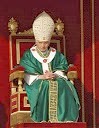
With the advent of the printing press in the 17th century, the Bible was made available to ‘common’ men, not just clergy. The Roman Catholic Church opposed this as reckless, calling these translations a “paper pope,” meaning that Protestants had abandoned papal authority and replaced it with a “pope” on paper—the written Word.
 Over the 2,000 years of church history, the authority of the written Word has repeatedly come under attack. Now again we are witnessing the decline of respect for the authority of Biblical teaching. I am not referring to liberal theologians, but to 21st century pastors who no longer teach the authority of God’s Word. They teach things like “Become a Better You: 7 Keys to Improving Your Life Every Day,” i.e., what people want to hear, not what they need to hear.
There is still a remnant that refuses to compromise the Biblical message. The infallible Word of God is the last word, the final authority; and they will submit to no other. It is time for a “new” protestant movement, a new generation of believers for whom the Holy Bible is indeed their “pope” on paper!
 Evidently, it is. A California pastor was outraged this week when he
found the Bible filed under “Fiction” at a Costco store near his home. Just another paper back? Forty years
ago, in the book, “As One without Authority,”
author Fred Craddock asked the question, “Where have all the absolutes gone?” If then, how much more today!
When Jesus spoke to the crowds, they were astonished that He taught as
“one who had authority” (Matt. 7:28-29). Biblical authority has been
at issue since Paul warned of those who would reject sound doctrine (2 Tim 4:3). Two thousand years later, the spirit of the age is still
trying to undermine the authority of the Word.
I don’t presume to know what is happening in the church around the
world today. But looking at the popular teaching of the largest churches in America, one would conclude that the masses want to hear more sermons on self-improvement and
self-actualization than good exegesis and exposition. Perhaps the paper back Bibles found in the “Fiction” section
at Costco really are a sign of the times!
General Petraeus joins the list of proud, powerful men who thought they were entitled to anything and invulnerable to its consequences, e.g., Bill Clinton, John Edwards, Elliot Spitzer. Of course it doesn't always lead to adultery. Currently, three other 4-star generals are under investigation for taking government resources for personal use. Nor is it limited to government leaders. Anyone in a position of authority—policemen, doctors, teachers, clergymen—can abuse it.
As a student of human behavior, it appears to me that a culture that values self-esteem as ours does is a breeding ground for such entitlement—even in Christian leaders. Remember the warning by Paul that in the latter days, men would be lovers of self (2 Tim 3:2)? When God gave the Promised Land to the Israelites, He knew they would be vulnerable to the pride of success.
Thus He warned: “Beware that in your plenty you do not forget your God… For when you have become prosperous and have built fine homes to live in… be careful! Do not become proud at that time and forget the Lord your God, who rescued you... and did it all so you would never say to yourself, 'I have achieved this wealth with my own strength and energy’… Remember the Lord is the one who gives you power to be successful” (Deut. 8:11-17, edited).
Did your mother used to tell you “if you can’t say something nice, don’t say anything at all”? I think our U.S. Senators, Congressmen, and politicians must not have been listening to their mothers.
As stirring as the emotions sometimes are when involved in the "rightness" of a political cause, those passions need to be under the control of the Holy Spirit. In Titus 3:2, Paul commands us "to malign no one," and refers to cursing, slandering, and treating with contempt. The Greek term rendered "malign" is the one from which we derive the English word blasphemy. If you watch CNN or Fox, or MSNBC; if you listen to Rush or Shawn, Mark Levine, Michael Savage or Michael Reagan, you will hear lots of maligning and scorning of politicians and other public figures. Believers are warned not to enter in to such things. Not only does it show contempt for God’s authority, but is inconsistent with our new nature in Christ.
We are already well into a season of grave electoral choices. And you may already have entered into some heated political discussions. And it’s difficult in the midst of the fray to maintain a spirit of holiness. But whether you are a Republican, Democrat, Independent, or somewhere in between, let us remember we are to “malign no one, to be un-contentious, gentle, showing every consideration for all men.”
In his apocalyptic vision in the Book of Revelation, the Apostle John introduces the “beast,” also called the Antichrist (Revelation 13:1). John describes him as the ruler of a vast empire, with power & authority given to him by Satan (Revelation 13:2), receiving worship from all the world (13:3-4), and ruling every tribe, people, language and nation (13:7). Combining his vision with Daniel’s (7:16-24), scholars of biblical eschatology conclude that some sort of world system will be inaugurated by the AntiChrist.
In 2011, the world’s national economies are more interdependent than any other time in history. And no place on earth will be untouched by the coming financial tsunami. Increasingly, economists are suggesting that the only solution to this crisis is the establishment of a one-world banking system and currency. And when that happens, isn’t it logical that a one-world government cannot be far behind?
Daniel and John didn’t say why people will accept the total authority of a single man in the last days. Indeed, it’s hard (especially for democratic citizens like us) to imagine how the world’s nations would subjugate themselves to a single authority. A logical conclusion is that the disasters described in Revelation 6-11 will create such a monumental global crisis that people will embrace anything and anyone who promises to give them relief. The time has arrived for God's watchmen to speak out (Ezekiel 33:6).
None of the Gospel writers tell us much of Jesus’ 30 years in Nazareth—except Luke, who tells us a story of Jesus at age 12. When Jesus’ family was returning from their annual “Passover” trip to Jerusalem, they lost Jesus! Upon returning to the City they found Him in the Temple, astonishing everyone with his insight. But after that, there is an 18 year period of silence. What was Jesus doing?
First, we know He submitted to the authority of his parents (Luke 2:51). It could not have been easy to submit to the will of his parents whose understanding of His mission on earth was very limited (Luke 2:50). Second, we know He worked in His father’s carpentry business. And since people did not have household furniture as we do today, He probably made yokes, ploughs, & ox carts.
For 18 years, the Son of God made yokes, ploughs & ox carts. Don’t you think there were times when Jesus was tempted to break out—to be free of the dull life in Nazareth? I know I would have been. And the Bible says He was “tempted in all things as we are, yet without sin” (Heb. 4:15).
Yet it was His obedience to those who could not possibly have understood Him that prepared him for His ministry to come. For 18 years in Nazareth, “He learned obedience through the things He suffered.” (Heb. 5:8-9). Making yokes, ploughs, & oxcarts may seem like an awful waste of time for the Son of God. But in such cicumstances, Jesus was perfected” (Heb. 2:10). Likewise, you and I will be perfected in our faith. What are your yokes, ploughs, & oxcarts?
Syncretism, the idea that all religions can be fused into one, is being replaced by Pluralism, a more pragmatic approach because it acknowledges differences but sees them as irrelevant. Pluralism is the ‘equal rights’ of religion. Pluralism promotes tolerance, without which no one in the 21st century will survive.
Pluralism puts Jesus on an equal footing with Buddha, Confucius, and Muhammad. But pluralism requires that we make Christianity more tolerant. Thus, any Scripture that insists on its own primacy must be revised, redacted, reinterpreted or just ignored. Sadly, though, in watering down the Bible, we lose our moral authority to speak out against the new cultural norms of our 21st century—leaving a moral vacuum. Albert Mohler, president of The Southern Baptist Theological Seminary, so eloquently wrote in his blog, “This is what happens when the Bible is thrown under the bus.”
Some are wondering how we should contend for the authority of the Scriptures without appearing intolerant. Why are we even trying to? It’s time to reclaim the authority and supremacy of the Bible and throw pluralism under the bus!
I just finished a class on the history of fundamentalism. For years, no one has wanted the label 'fundamentalist.’ Up through 1980s, it became a ‘bad’ word, having connotations of back-water hayseed preachers and snake handlers, narrow-mindedness and ignorance. In the last 30 years, then, the word has fallen out of common use. No intelligent person would call himself a fundamentalist anymore! But did you know that fundamentalism was born out of a doctrinal controversy with religious liberals of the 19th century who questioned the inerrancy and infallibility of the Scriptures?
In his book “Battle for the Bible,” published 40 years ago, theologian Harold Lindsell wrote: “A great battle rages today around biblical infallibility. To ignore this battle is perilous. To come to grips with it is necessary… When inerrancy goes, it opens a small hole in the dike, and if that hole is not closed, the levee will collapse and the whole land will be overrun with the waters of unbelief.” Though those words were written almost 40 years ago, they are alarmingly relevant today.
The cultural wars of our generation demand that we defend the authority of the bible. Paul said we should “always be ready to make a defense to everyone who asks us to give an account… and to exhort in sound doctrine and to refute those who contradict it” (1 Peter 3:15; Titus 1:9). And those words, written 2,000 years ago, are more relevant today than ever.
Last week I began taking a Spanish course. I am highly motivated because I am tired of not being able to communicate with the Spanish speaking people of Belize. More importantly, I want to understand them: I want them to know I really “get” them!
How do you think Jesus felt when the Disciples and His friends failed, repeatedly, to understand Him? And who could forget Martha? Even though she believed Jesus was the Messiah, she failed to understand the depth of His authority and power, saying, (when Jesus told her ‘your brother shall rise again’),"Oh, yes, on resurrection day he will arise but what good is that now?!" (John 11:24, slightly paraphrased by me) In his humanity, it must have troubled Christ to have his closest friends fail to "get" Him. "Don't you know who I am yet?" the Lord seemed to say. "I not only have life: I am life; I am the resurrection" (John 11:25).
Matthew tells about Jesus’ encounter with a Roman Centurion who asked Jesus to heal his son—saying “I am a man of authority, so I know you too have authority and you have the power to do it” (Matt. 8:9-10). How fascinating! Jesus was delighted to find someone who believed Him, who "got" Him. I think it brings great joy to our Lord when we demonstrate by our actions that we really do "get" Him. For this reason, since the day we heard about you, we have not stopped praying for you and asking God to fill you with the knowledge of his will through all spiritual wisdom and understanding. Colossians 1:9
A United State House member calls the President a liar; a tennis star explodes into an expletive-laced tirade against a line judge; and a famous rapper rushes the stage of an award ceremony, grabs the microphone from the winner, and proclaims another should have won.
The surprise is not that these people were offensive, but that the offenses occurred in a forum where there was a breach of etiquette—they were uncivil. The USA Today journalist quotes an expert who claims the increase in uncivil behavior is related to the Internet, which has changed how people talk to each other. With the speed of light, anyone can give vent to their feelings! And this “say-what-you-think-at-all-costs” manner of expression is finding its way into people’s conversation and conduct.
Two thousand years ago, New Testament writers Paul, Peter and Jude warned against a breakdown of civility in the last days—self-willed, despising government, and speaking evil of those in authority (Titus 1:7, 2 Peter 2:10; Jude 8). A “self-willed” person is one who asserts his own rights but is reckless to those of others. “Speaking evil” is a compound verb: hurt + reputation = to defame.
We must watch our hearts lest we become mired in the attitude of the day. After his description of these uncivil behaviors, Paul says those who are entrusted with God's work must be blameless-not overbearing, not quick-tempered, not violent, loving what is good, self-controlled, subjecting ourselves to the authorities and even praying for them. We are not to malign anyone nor be contentious, but gentle and considerate of all men. (Titus 1:7-8; 3:1-2)
Let these recent uncivil events remind us to us to remain vigilant against the spirit of incivility that is in the world today.
Last Sunday my friend Kevin asked me to preach at his church in San Jose. The title of my ‘sermon’ was: “You Can’t Live Beyond Your Vision.” Other ways I could have said this are: “Seeing is Believing” or “What You See is What You Get." The point of my message was to question ourselves as to how we limit God in our lives by the way we view Him.But another expression that is often used to encourage people to see things correctly is: “Keep Looking Up” meaning, of course, that we should look to God for answers, for insight, and for encouragement.
But I have a better one: “Keep Looking Down.”
The difference between the two is where one lives. If you “live” down here, on earth, then of course you must keep looking ‘up.’ The problem is that this view can keep you “earthbound.” But if you are living in the heavenlies, you will always be looking down. Only when you truly recognize that you are positioned IN Christ, in the heavenlies, will you be able to see all things from the Lord’s point of view.
“The Lord looks down from heaven upon the children of men” (Psalm 14:2)... [and] God raised us up with Him, and seated us with Him in the heavenly places in Christ Jesus..." (Ephesians 2:6).Our enthroned Christian position becomes the viewpoint from which we see all of our circumstances as we Keep Looking Down from our place of authority and power in Jesus.What is your point of view?